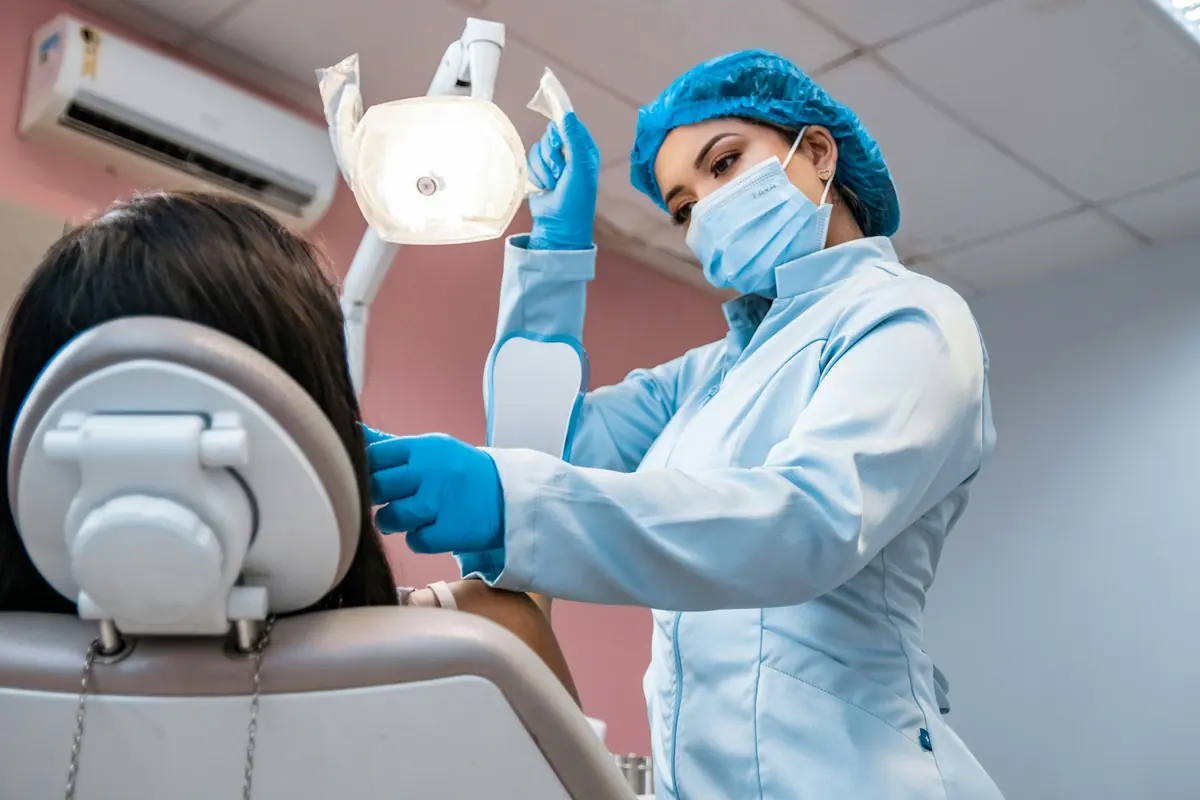
What happens at a cleaning appointment
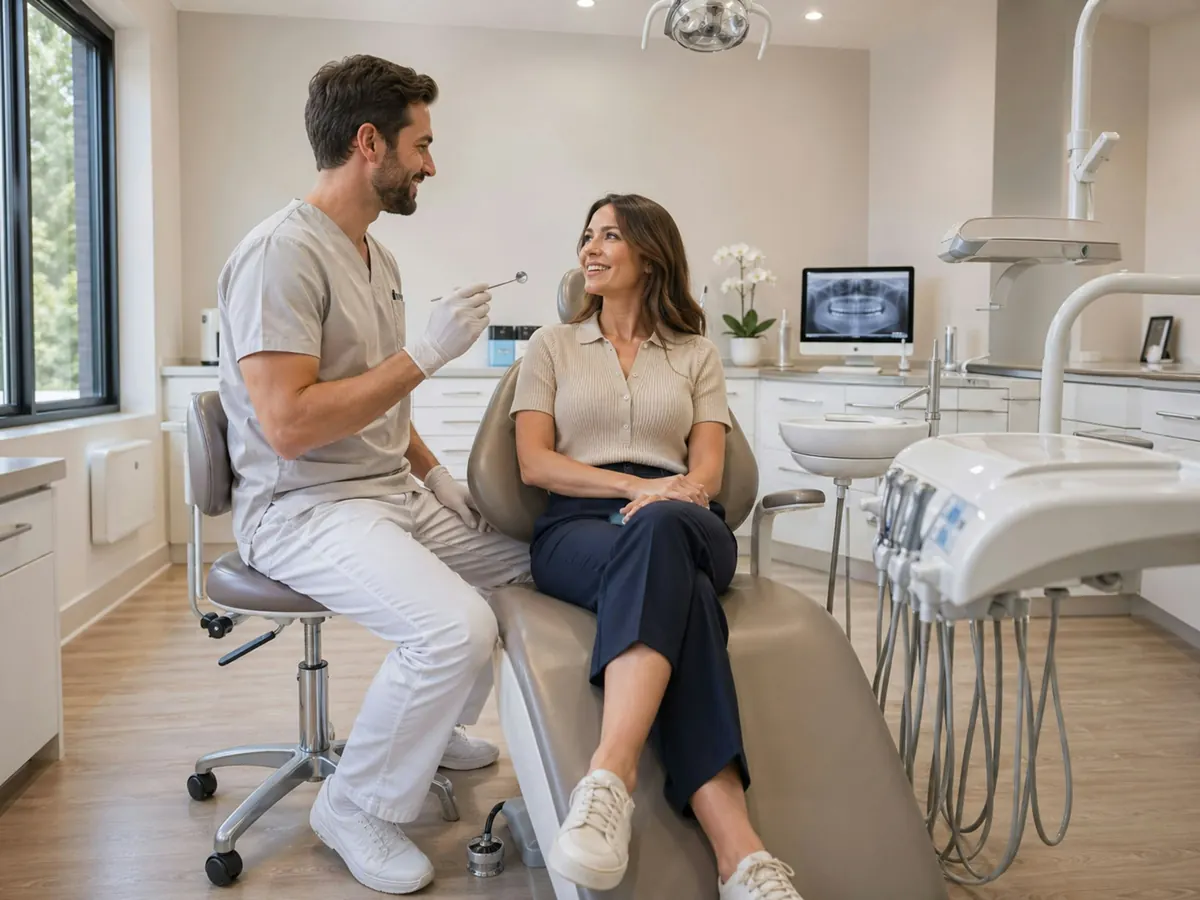
A cleaning visit at Bricktown takes about 45 minutes for most patients. You will start with a short health review — medications, medical changes, pregnancy, anything that might affect your gums or healing. Then we take digital X-rays, which take about ten seconds and use roughly 80% less radiation than film.
Your hygienist will clean above and below the gumline, polish away surface stains, and talk you through what they found. Your dentist finishes with a hands-on exam of your teeth, gums, bite and soft tissue — including an oral cancer screening that takes about 60 seconds.
If everything is healthy, you leave with a polish and a plan for the next six months. If something needs attention, we explain it in plain language, show you the image, and give you a written estimate before anything happens.
How often do you actually need one?
For most healthy adults, twice a year. That said, the number is not the point — the interval is a tool, and some people need it adjusted.
We recommend three-monthly cleanings if you smoke or vape nicotine, if you have active gum disease, if you have diabetes, if you are pregnant, or if you have a history of heavy decay. We recommend longer intervals — nine or twelve months — if you have low decay risk, excellent home care and no gum disease.
Rather than arguing from a chart, we look at your gums, how fast plaque builds and what your X-rays show. If your gums bleed every time you brush, you are already overdue regardless of what the calendar says.
The difference between a cleaning and a deep cleaning
A regular cleaning (prophylaxis) cleans above the gumline and polishes. A deep cleaning (scaling and root planing) goes beneath the gumline to remove hardened tartar from the roots, and is usually spread over two visits with local anaesthetic.
Deep cleanings are not upsells. They are indicated when there is measurable pocket depth, bleeding on probing, or tartar you can see below the gumline. We chart pocket depths at every visit so you can see whether yours are improving.
After a deep cleaning your teeth may feel more sensitive for a few days because the root surface is temporarily exposed. That settles. If it does not, tell us — it is usually treatable.