Why an implant rather than a bridge
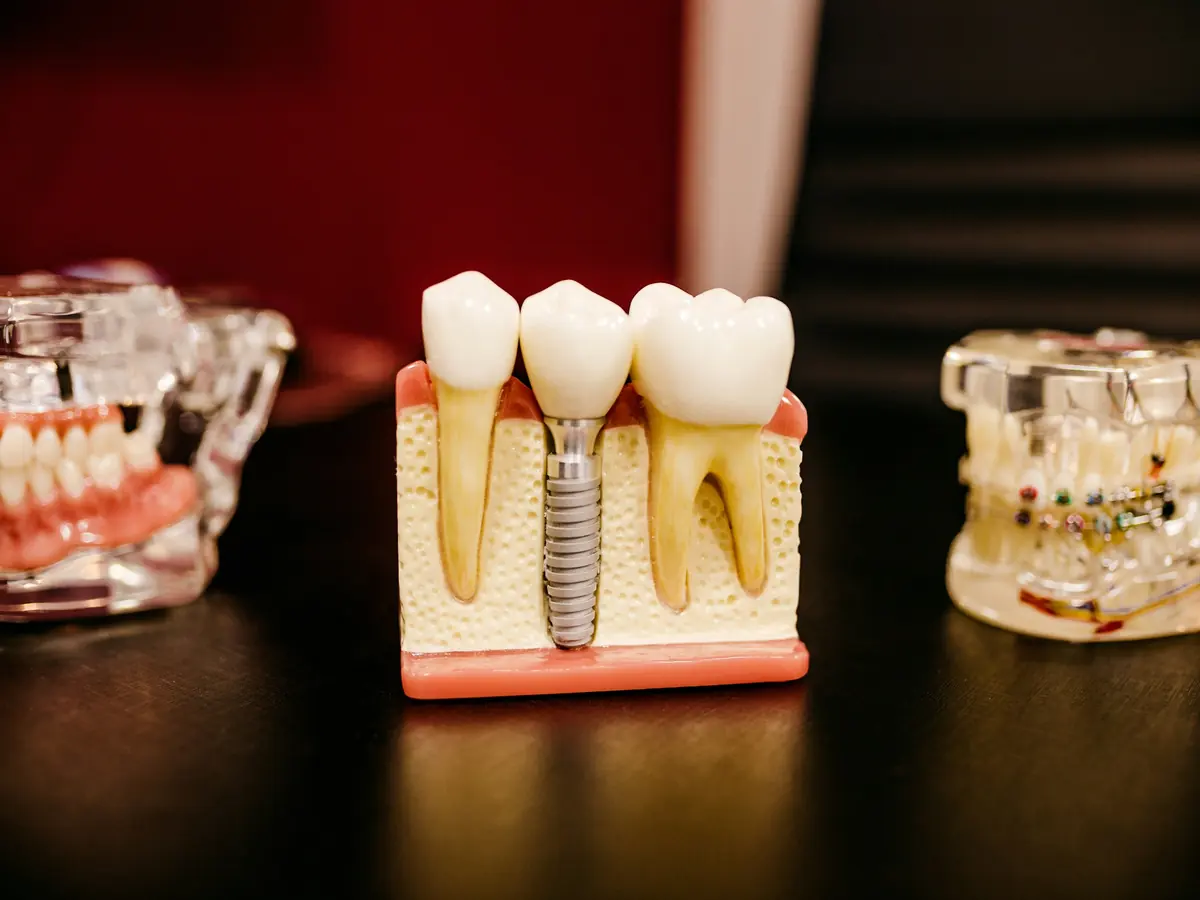
A bridge is supported by the healthy teeth on either side of the gap, which means those teeth have to be cut down and crowned as well. An implant stands on its own. Nothing adjacent is touched.
The second reason is bone. When a tooth is removed, the jawbone that once supported it begins to shrink. Over years this changes the shape of your face and can make a future implant harder to place. An implant preserves that bone because it is anchored in it.
The third is longevity. A well-placed implant with a good crown typically lasts 20 years or more. A large bridge can need replacing sooner, and every replacement cycle costs you more tooth structure than the last.
What the procedure involves
We start with a consultation and 3D imaging. A CBCT scan gives us a three-dimensional view of your jaw, so we can measure the bone height and width precisely and plan the exact position of the implant before we begin.
On the day of surgery we place the implant using guided surgery — the plan from your scan guides the drill. Most patients describe the placement itself as pressure rather than pain, and we keep you comfortable throughout with local anaesthetic and optional oral sedation.
The implant then needs 3 to 6 months to fuse with the bone. During that time we fit a temporary crown or a healing cap, so you are never walking around with a visible gap. When integration is confirmed, we take a final scan and your permanent crown is fitted.
What affects the cost
The price of an implant includes the implant itself, the abutment and the custom crown. It does not include grafting. If you have lost bone, a graft may be needed before or alongside placement, and that adds time and cost.
Single implants typically run from $2,900 for the complete restoration. Full arch cases with multiple implants are quoted case by case, as the number of implants, the type of restoration and any grafting all change the picture. You will receive a written estimate before any treatment begins.