What the difference actually is
A bridge is a fixed piece that spans a gap. It is anchored to the healthy teeth on either side, which means those teeth have to be cut down and covered with crowns that support it. It is a well-established, predictable treatment that has been done for decades.
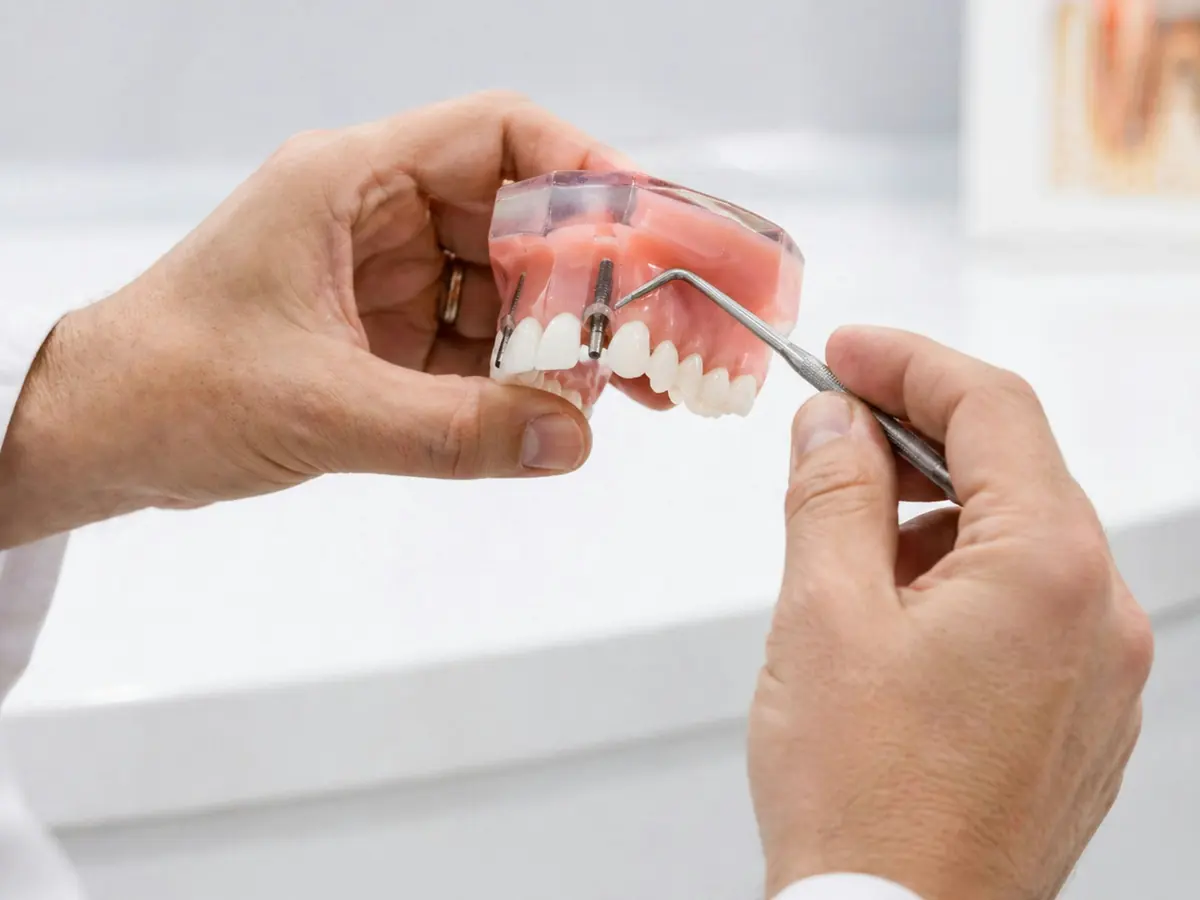
An implant is a titanium post placed into the jawbone, which then fuses with the bone over several months, topped by a custom-made crown. It stands on its own. No adjacent teeth are cut down, because nothing adjacent needs to be.
That single structural difference is what produces most of the downstream differences between them.
Cost
A bridge usually costs between $1,500 and $3,500 per tooth replaced, depending on the material and how many teeth are involved. A single implant with a crown typically starts around $2,900 with us, and full-arch cases run considerably higher.
The comparison that matters is not the first invoice. It is the total cost over fifteen years. A bridge that needs replacing in year eight, and again in year fourteen, costs considerably more over its life than a single implant that does not. Each replacement cycle also removes more tooth structure than the last.
If cost is the deciding factor, ask both practices for a fifteen-year cost comparison rather than a single quote. It reframes the conversation honestly.
Bone health and timeline
When a tooth is lost, the bone that held it begins to shrink. Within a year it can lose a meaningful portion of its volume. This is why a delayed implant gets harder the longer you wait — there may not be enough bone left, and you may need a graft first.
An implant stops that shrinkage, because the bone is anchored to it and continues to be loaded. A bridge does not.
On timing: a bridge can often be fitted within two to three appointments over a couple of weeks. An implant needs surgery and then three to six months of integration before the crown goes on. That wait is the price of not having to cut down two healthy teeth.
When a bridge is the better answer
We are not ideologically opposed to bridges, and we place plenty of them. A bridge is often the right call when a tooth has already had a root canal and a large filling, when the neighbouring teeth are already crowned and need protection anyway, or when a patient prefers a faster, less surgical route.
A bridge is also frequently the more affordable option, and for some patients cost is the deciding factor, which is a legitimate reason.
It is worth asking any practice that recommends a bridge whether an implant was considered and why it was ruled out. A good answer names specific reasons. A vague answer is a sign.
How to decide
Start from the condition of the teeth on either side of the gap. If they are healthy and intact, an implant preserves them. If they are already heavily restored and are due for crowns regardless, a bridge may serve you well and cost you less.
Then consider bone. If you have been missing the tooth for a while, ask about the bone volume. If a graft is needed, factor that additional time and cost into the comparison.
Finally, think about longevity and maintenance. An implant needs a guard if you grind. A bridge needs a floss threader and, eventually, replacement. Neither is maintenance-free, and it is fair to ask your dentist which they think you will take better care of.
Frequently asked questions
With good home care and regular check-ups, a single implant with a crown typically lasts 20 years or more. Many implants placed in the early 2000s are still in service.
No. A bridge is placed under local anaesthetic and most patients feel nothing during the appointment. There is some tenderness for a few days afterwards as the gums settle around the new crown.
Rarely, and usually for identifiable reasons — most often uncontrolled diabetes or smoking, both of which affect healing. If an implant does fail, it can usually be replaced. We will discuss your specific risk factors honestly before you commit.